Showing posts with label New Zealand Industrial Design Council. Show all posts

Wednesday, 25 November 2015

The familiar unknown


MARK CLEVERLEY: DESIGNER
by Jonty Valentine
David Bateman, 143 pp., August 2014, $60.00, 978 1 869 53869 9

Writing to a would-be British migrant to New Zealand in January 1961, Henry Holden, an economist at the Department of Industries and Commerce, observed that while 'New Zealand manufacturers are becoming increasingly aware of the merits of industrial design [...] it would seem that this interest has not yet developed to the point where full-time consultants have been established [...] Normal design services are rendered by Advertising Agencies and in some instances architects and publishers.' <Archives New Zealand, IC W1926 57/1/6 vol 1, letter from H C Holden to G King, 25 January 1961>. Holden was in a position to know about how design functioned and was perceived in New Zealand; he was a member of the industrial design study team established in May 1959 by Dr W B Sutch, permanent secretary of the Department of Industries and Commerce, to investigate the role of industrial design in New Zealand manufacturing with a view to establishing a design promotion body modelled on the British Council of Industrial Design (CoID).

In January 1961 Mark Cleverley was working as a draughtsman in the architectural department of the New Zealand Dairy Company Ltd in Hamilton; it was, as he recalls in the series of interviews with Jonty Valentine that form the core of this book, 'all a great buzz'. Like Sutch, Cleverley had ambitions for design in New Zealand and shortly after, as Sherry Blankenship recounts in her introductory biographical essay, moved with his wife and family to Christchurch where, as a recipient of one of the first Queen Elizabeth II Arts Council Scholarships, he enrolled as a student at the Ilam School of Fine Arts at the University of Canterbury.  Cleverley was precisely the sort of person Sutch saw as a lynchpin of his vision of an intelligence-led economy, one characterised by 'brains and skills' not the production of raw material for conversion elsewhere.

In many respects, Cleverley's choice of Ilam, rather than, say Elam or the Wellington School of Design – soon to be incorporated into Wellington Polytechnic – was serendipitous notwithstanding the fact that the competing institutions were in the process of establishing industrial design courses. When Cleverly started his studies, the design component of the Ilam diploma course was taught by Florence Akins (1906-2012), who, as he observes 'was quite old-fashioned [...] virtually just craft'; Akins, the first Ilam student to be awarded a Diploma in Fine Art had been appointed to the staff in 1936. Things changed the following year when the new head of school, the English silversmith John Simpson, recruited his fellow countryman the designer Maurice Askew (1921 - ) to teach graphic design. Askew's approach to the subject was rooted in interwar European modernism and marked an abrupt shift in the school's teaching of not only two dimensional design but also three dimensional form.
Unidentified photographer, Queen Street 18 June 1964. The design of Robert Kerridge's 246 Queen Street development (Rigby-Mullan, 1959) embodied an alternative, commercial American-inspired, modernism, to that practiced by Cleverley
Sir George Grey Special Collections, Auckland Libraries (7-A918)
As Cleverley studied, so New Zealand attitudes toward design and its role in manufacturing underwent significant shifts. In Christchurch the recently founded Design Association of New Zealand (DANZ) attempted to establish a 'design centre', based on the CoID's eponymous London shopfront. There was a difference though, proposed Christchurch design centre was to be more shop and less front, more a sales outlet than an impartial design promotion agency, even if DANZ anticipated that it would be publicly funded. The Auckland cinema chain entrepreneur Robert Kerridge was more brazen, but equally unsuccessful, in seeking government support for the formation of a similar retail front as part of his 246 Queen Street retail development.

It's evident that the idea of a government-sponsored design promotion body was as misunderstood in New Zealand as it was elsewhere: designer practitioners argued these bodies should be all about their practice; retailers, importers and advertisers saw them as a profit-making opportunities; manufacturers and primary producer organisations identified them as a source of funding that could enable niche market penetration. At various times all three sectors expressed opposition to their formation and all three contributed to the demise of the New Zealand Industrial Design Council (NZIDC), the institutional outcome of Sutch's investigation, which was finally realised in November 1967 when an Order in Council brought into force the provisions of the Industrial Design Act 1966.

Confusion as to what design councils were conceived to do carries over in this book with Valentine thanking a practitioner body, the Designers Institute of New Zealand (DINZ) for permission to reproduce articles from Designscape, the influential magazine produced by the NZIDC from 1969 until 1984. In fact DINZ, which was formed in 1991, has no claim to ownership of the magazine. The NZIDC was  a government agency created by an Act of Parliament and the Act abolishing the council in 1988 transferred the Crown's residual ownership of the assets of the NZIDC, including copyright, to Telarc, a Crown Entity involved with quality control that had been established in 1972 by the dairy industry.

This sense of uncertainty about the ownership of design prompts a discussion of Cleverley's 1972 application to join the British design practitioner body, the Society of Industrial Artists and Designers. Now called the Chartered Society of Designers it formally coalesced in 1930 as the Society of Industrial Artists; a number of New Zealanders were early members including Len Lye, Eric Lee-Johnston and James Boswell. It had no formal connection with either the Council for Art and Industry, the first British design promotion body that operated from 1934 until 1939, or its successor body the CoID, established in 1944 and now called the Design Council. To the contrary, those responsible for appointing the first CoID deliberately sought industrialists and avoided practising designers. As the design writer John Gloag observed approvingly, it consisted 'almost entirely of specialists, moreover who know what they are talking about. There is not likely to be any "uplift" or "art blah" emitted from the deliberations of this body.' <National Archives BT/64/5173, letter from J Gloat to F Meynell, 21 December 1944>. By 'specialists' Gloag meant manufacturers; the 'art blah' came later.
Milner Gray (1899-1997) for the British Council of Industrial Design, Royal arms of England (c 1946).  Gray redesigned the arms for use as the council's logo. This version emphasised the council's role as a state body while conveying a somewhat whimsical sense of modernity
It's worth remembering that the CoID was established as a grant-aided body primarily 'to promote by all practicable means the improvement of design in the products of British industry'. Michael Farr, quoting from the Council's first annual report, defined the CoID's understanding of industrial design as 'not simply the plan of a particular product. It is a unity in the industrial process, a governing idea that owes something to creative design, something to the machine, something to the consumer, and links them all together.' <M Farr, Design in British industry: a mid-century survey (Cambridge: University Press, 1955), p. 209>. Design promotion bodies were primarily intended as policy tools for changing industrial mindsets, not for promoting the practice of design or protecting its practitioners.

The changing perception of design by New Zealand businesses is encapsulated in a letter sent by T E Clark, managing director of Crown Lynn Potteries Ltd, to Sutch in July 1960 inviting him to 'favour us with your presence, and with a short address, at the presentation of prizes in Our Crown Lynn Design Contest for 1960.' Asserting that the design competition was 'second only to the Kelliher Prize' for painting, Clark noted that 'In this way [...] we are taking the first steps towards making the New Zealand pottery industry a 100% New Zealand industry, and opening a new field or the creative abilities of New Zealand designers' <Alexander Turnbull Library, Sutch Papers, 2002-012-22/7, letter from T E Clark to W B Sutch, 19 July 1960>. That the Crown Lynn design competition was viewed as second only to the Kelliher says more about the poverty of artistic patronage in New Zealand than it does about Crown Lynn's competition, which had earlier been criticised as unethical by the Association of New Zealand Art Societies. The competition however, raised the company's public profile and partly expunged its reputation for producing shoddy, ill-designed and dubiously labelled wares.

Cleverley won the first of his Crown Lynn design awards in 1961, but being a prizewinner in such a competition didn't seem to auger a career in New Zealand's under-capitalised and erratically managed ceramics industry. After having subsidised his university study by working at for the architectural practice Warren & Mahoney, Cleverley found employment as a graphic designer in Christchurch, with an advertising agency in Auckland and then, between 1966 and 1968, with the entrepreneurial packaging firm UEB Packaging Ltd.
Unidentified designer/UEB Packaging Ltd, Detail of packaging for British Wax candles (c 1974) showing the UEB logo.
UEB was a New Zealand firm that embraced the concept of good design with an almost evangelical fervour. during the late 1960s and 70s UEB's squared scroll logo was ubiquitous on an extraordinary range of consumer products. UEB had been established in 1947 by James Doig (1913-1984), a former Glaswegian merchant marine officer to manufacture cartons and boxes by the mid 1960s, the company had become one of the largest companies in the country and had expanded into fields such as carpet manufacturing. Aside from his entrepreneurial drive, Doig had a strong interest in design, recognised by his appointment as deputy chairman of the inaugural governing body of the NZIDC in 1966; he retired in 1973.
Mark Cleverley (1934?-)/Crown Lynn Potteries Limited,  Palm Springs styled by Dorothy L Thorpe earthenware plate (1967-1972). One of Cleverley's early challenges at Crown Lynn was to develop the American decorator Dorothy Thorpe's sketches into feasible production designs.
Portage Ceramics Trust (2008.1.626)
Cleverley though is best-known as a designer of Crown Lynn ceramics and he was finally recruited by the company as a development designer in 1967. This is where the informal interview format that forms the heart of the book shines. Valentine introduces a text Cleverley wrote for the NZIDC's magazine that prompts the latter into an extended and informative account of his work for the company <M Cleverley, 'Stacks of crockery', Designscape, no 58 (May 1974), pp. 5-7>. This liberty of expression enables a sense of how design functions; its interactive process as the designer both as a form maker intimately involved in the mechanics of production and as a mediator between the institutional power formations of the enterprise.

Notwithstanding the fact that much of his output for Crown Lynn has hitherto been either ignored or misattributed in the literature, Cleverley's work at Crown Lynn was technically innovative, visually exploratory, intellectually informed and of a quality and sophistication rarely seen in New Zealand manufactured goods. Unfortunately he was sidelined when the company's board initiated a series of what might best be euphemistically described as corporate blunders: it changed its name, acquired unrelated manufacturing interests, restructured its ceramics production while failing to support these changes with associated investment, dropped the design competition and employed a Royal College of the Arts graduate and former technical college lecturer, Tom Arnold, as design director. Arnold stayed less than three years before lasting less than a year running down the NZIDC as its penultimate director. The 1980s were not good years either for design or its promotion.
Mark Cleverley (1934?-) for New Zealand Post Office / Harrison & Sons, 10 cent definitive stamp (1969) with unidentified designer for New Zealand Post Office, commemorative envelope (1970)
But notwithstanding his impressive – if largely unrecognised – career as a designer of ceramics, it was in the esoteric field of stamp design that Cleverly made his most distinctive mark, as one of a small group of designers commissioned by the Post Office to invent a new image for New Zealand stamps between 1969 and 1974. This decision produced some of the best-designed stamps to be found anywhere in the world. Presumably in order to mollify conservative critics, the Post Office continued its tradition of simultaneously producing some of the more conservatively designed stamps to be issued anywhere.
Mark Cleverley (1934?) for New Zealand Post Office/Japanese Government Printing Bureau, Expo'70 stamps (1969) with [Mark Cleverley (1934?-) for New Zealand Post Office] commemorative envelope (1970)
The Post Office's decision to respond to criticism of its low design standards by improving the quality of its definitive stamps prompted the establishment of a design advisory committee in 1968, which included John Simpson of Ilam and Gil Docking of the Auckland City Art Gallery (as it was), along with 'all the old guard from the Post Office'. The committee ultimately invited a number of designers to submit proposals that resulted in a series of commissions for a new definitive range; Cleverley designed the 10c, 15c, 25c, 30c $1 and $2 issues; Maurice Askew, one of his lecturers at Ilam, designed the 28c and 50c stamps.

The resulting designs were the subject of a short, critical, assessment in the NZIDC's Designscape (no. 8 (October 1969), probably written by its director, Geoff Nees, which is reproduced – in all its glorious Letraset layout – in the book. While noting that 'the general standard is far superior to most previously produced [...] the new stamps represent a landmark in the history of the New Zealand Post Office', Nees cautioned that all was not good and compromises had been made. The English-born artist and designer Eileen Mayo's six stamps were derided as 'stodgy and ill-considered', a view that considering her long career as a stamp designer, was both damning and provocative. Cleverley's modernist designs were, however, the 'best of the lot'.
New Zealand Post Office after Mark Cleverley (1934?-)/Harrison & Sons, 1974 Commonwealth Games commemorative issue with PD/Colin Simon (logo) commemorative envelope (1974). Cleverley disclaimed responsibility for the final stamp designs
These reductive, asymmetric designs challenged the Post Office's traditional approach to more than just the design of its stamps. For the 10 cent definitive he attempted to render the New Zealand armorial bearings in a more contemporary idiom, in much the way Milner Gray had updated the British arms for the CoID some two decades earlier. As Cleverley recounts, the proposal was rejected, as was his hopes of embossing the armorial. These designs perturbed the deeply conservative culture at the Post Office and Cleverley's last designs for it were for the 1974 Commonwealth Games.  However, as Blankenship recounts, his design requirements were too much for the then Postmaster General, the Labour party's Roger Douglas – who would later gain notoriety for his neoliberal reforms of the state apparatus, including the abolition of the NZIDC – and subsequent changes imposed by the Post Office prompted Cleverley to disavow his role as designer of the issue.

Blankenship fails to either identify Douglas as the obstructor or recognise that the Postmaster General was a political position – it was a Cabinet post – and thus that his intervention had a political dimension over and beyond the bureaucratic. This avoidance of social and political contexts denies an understanding of the impact Cleverley's designs for both Crown Lynn and the Post Office had on New Zealand in the 1970s. In an economically modest, conservative and homogenous society, suspicious of both the arts and innovation, modernist design – with the notable exception of motor vehicles – seems to have been regarded as a pathway to a sort of material perdition. In his modest way, Cleverley's designs of the nation's crockery and stamps made a significant if subtle contribution to the country's changing perception of the modern during the 1970s.

After leaving Crown Lynn in 1980, Cleverly took to teaching, initially at Ilam then at Wellington Polytechnic, retiring in 1996. Crown Lynn, by then a small part of the Ceramco Corporation Ltd, was shut down in 1989 by the asset-stripping, entrepreneurial businessmen who now controlled the company. The Post Office was split up and privatised and the NZIDC abolished. The society that over the 1970s had against its own inclinations developed a nascent manufacturing sector and a concurrent sense of design was now focussed on unbridled consumerism of products manufactured elsewhere and devoid of local design input.
Detail of the stamped mark on Crown Lynn Potteries Limited's Palm Springs wares. Mark Cleverley is acknowledged as the designer although his name is misspelt as 'Cleverly'
Valentine provides a reflective conclusion that acts as a terminal bookend to his interviews with Cleverley. In it he contextualises and critiques the forgoing conversation, locating it within the surprising normality of the designed product in 1970s New Zealand: the stamps, the Colin Simon logo, the Crown Lynn 'Apollo' dinner service along with the Lego building blocks and other international manifestations of the designed product that were available here. As he notes:
A lot of Mark's work will be familiar to many New Zealanders and will likely provoke similar personal memories and associations. But unlike literature or artworks that are viewed in galleries, hung on walls with labels to name the artist and explain what they are, most of these artefacts have not been attributed to an individual designer and certainly have not been explained, historicised or contextualised as such. The paradox of most designed objects is that while they are familiar and most likely encountered every day in our homes they cease to be consciously 'attended to' soon after purchase. And the result of this is that the makers of the objects, the designers, are completely forgotten. Actually, were most often never known by name.
This perceived need for identity is a problematic that teeters on the brink of a now discredited form of design history that has been identified by Tony Fry as a sort of canonisation: the 'great white men of modernist history' narrative. The suspicion that this text falls into the 'great white men' category of historical exegesis is somewhat reinforced by the series title 'Objectspace Masters of Craft', a designation that ultimately sits uncomfortably with the book's subject and content. A canonic history is one that 'is generative of design heroes and movements as the primary agents of the evolution of design; and a history which takes the canon as given knowledge and the foundation upon which to elaborate or criticise.' <T Fry, Design history Australia (Sydney: Hale & Iremonger, 1988), p. 27>. Fry dismisses the validity of this premise, posing the fundamental query: 'what of all the other designed objects, the vast majority, which evolve and are used but are excluded from such a history?'.

Anonymous history – the phrase was coined by the architectural historian Sigfried Giedion in  his historical account of the industrialisation of commodities, Mechanization takes command: a contribution to anonymous history (1948) – raises another set of problematics. As Fry observes, much that Giedion discussed wasn't anonymous, 'all the objects which populate this history have the stamp of commodities; all have been named in the market-place.' Moreover, he effectively ignored the social relations of production by separating them into discrete economic and cultural spheres rather than seeing mechanisation as 'a function which acts on a specific society'. Fry asserts that 'while there were changes at the industrial point of production, which recast the social relations of production, these changes equally reconfigured the domestic, as re-ordered use and space.' <Fry, pp. 32-33.>. A similar prognosis might well be applied to Valentine's text, but in this case it would be redundant. His specificity is quite deliberate. Recognising the formal modernist demarcations, the 'need to differentiate between spheres of design', Valentine proffers the rationale
that when I play the role of a graphic-design writer I am conscious that my job is always to try to present an authentically design-based narrative, and part of doing that is to constantly question my own discipline's use of language and mythologies.
Imposing parameters on this history of design in New Zealand has not detracted from the power of the text nor the importance of its content. Unlike much of what passes for the written history of design in New Zealand, this is an intelligent, rigorous and perceptive recounting of a practice; a significant and important contribution to the archive. Rather than a 'revised New Zealand history from the perspective of a graphic designer', the entertaining anecdotes of a critic, or the well-rehearsed opinions of a practitioner, this is a key text in the nascent history of design in New Zealand.

Thursday, 13 February 2014

Sutch’s dream: a background to the New Zealand Industrial Design Council


He aha te mea nui o te Ao? He tāngata. He tāngata. He tāngata.

Judges at Festival of Wellington carpet design competition, with some of the entries. From left: 
Secretary for Industries and Commerce, Dr W B Sutch; general manager of Felt & Textiles Ltd, 
Mr K A Wills. Photograph taken 25 November 1960 by an Evening Post staff photographer.
Reference number: EP/1960/4273/6
Alexander Turnbull Library Dominion Post Collection
Ever since they were first established, the purpose, function and responsibilities of state-sponsored bodies promoting the use of design in industry have been misconstrued, either deliberately, or, more usually, through ignorance. Their origins are unclear; those responsible for their formation are now invariably forgotten, or displaced in the murky histories of quango politics; their financing was invariably nebulous; and the issues they were formed to confront have long been forgotten or superseded. In crude dialectical terms, state-sponsored design promotion bodies can be seen either as yet another worker-funded tool deployed by capitalist interests in their drive to recruit more consumers for their productions or as an attempt by the state to interfere in the free operations of the market.

Between 1967 and 1988, New Zealand, like a number of countries in the [British] Commonwealth of Nations, had a state-sponsored design promotion body, the New Zealand Industrial Design Council (NZIDC). It was established through an Act of Parliament by a National party government in 1966, during the heady days of New Zealand’s short-lived embrace of the welfare state; and it was abolished in 1988, a casual victim of the fourth Labour government’s espousal of neo-liberal, market-driven values. The NZIDC’s survival was always tenuous: conceived of by the left, it was brought into play by the right; initially funded by the state, it was intended that it be funded by its primary beneficiaries, the curiously indifferent private sector; aimed at educating manufacturers and consumers in order to achieve greater economic efficiencies, it was perceived by designers as being primarily an institutional support mechanism for their practice; and intended to benefit society at large, it ended up providing state-funded largesse for private sector management. This post seeks to identify some of the background influences that led to the formation of this body.

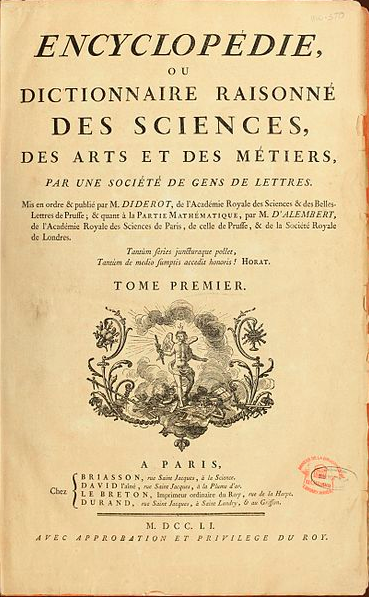
States around the world have long patronised artists, including those that we now describe as designers. Attitudes towards the idea of design began to change in the mid-eighteenth century with the publication of Denis Diderot and Jean Le Rond D’Alembert’s Encyclopédie with its innovative and confronting exposition of the mechanical arts. But it was only following the establishment of the Conservatoire des Arts et Métiers (1794) in Paris during the French revolution that administrators and politicians began to realise that design had a separate function to traditional arts practice, one that abjured the idea of direct patronage in favour of education and promotion. More important was the realisation that design, or as it was more commonly understood, industrial art, could play a significant part in the expansion of trade and industry.


By the early 1830s it was becoming evident in Britain that, notwithstanding its position as the first country to embrace industrialisation, its manufacturing was losing out to French, Prussian and Bavarian industry in part due to the abysmal standards of the design in its manufactured commodities. Between July 1835 and July 1836, a British House of Commons Select Committee on Arts and Manufacture, chaired by a Liverpool MP William Ewart, inquired into ‘the best means of extending a knowledge of the arts and the principles of design among the people (especially the manufacturing population) of the country’.


One outcome of the committee’s deliberations was the establishment of twenty Schools of Design in manufacturing centres throughout the country including schools, at Somerset House in London (1837), Birmingham (1843) and Glasgow (1845).  Another, more visual, if transitory, legacy of the committee’s deliberations was the 1851 Great Exhibition of the Works of Industry of all Nations. Both moves impacted the distant colony of New Zealand: tiny as it was, New Zealand was a captive market for British manufactured commodities, many of which were designed by students of the school; and, from 1851 New Zealand participated in a number of international exhibitions, sometimes barely visibly, and held three, although their international character was not particularly evident. Moreover, as Ann Calhoun has noted, New Zealand art schools established in the 1870s and 80s employed graduates of the National Art Teacher Training Scheme – the South Kensington System – and, more often than not, adhered to its training syllabus with a considerable degree of verisimilitude (A Calhoun, The arts and crafts movement in New Zealand 1879-1940 (Auckland: Auckland University Press, 2000)).

By the end of the nineteenth century, the British state’s interest in design and industry had waned, notwithstanding increasing evidence that it was losing the manufacturing wars, not only against its old competitors on mainland Europe but also to the rising industries of the United States. In a belated response, British civil servants launched a series of design-focussed  initiatives, including a dedicated exhibition design organisation, the Exhibitions Branch, located within the British Board of Trade. Following the First World War, the same department of state launched a semi-public design promotion body, the British Institute of Industrial Arts, which sought to interest both manufacturers and, to a lesser degree, the public in the idea of design; it failed.  


In July 1924, Ramsay MacDonald prime minister in the short-lived first British Labour administration, acting on the advice of the president of the Board of Trade, Sidney Webb, established a committee ‘to inquire into the conditions and prospects of British industry and commerce, with special reference to the export trade.’ (Great Britain. Committee on Industry and Trade, Factors in industrial and commercial efficiency (London: HMSO, 1927), ii). Industrial art was one of the factors addressed by the committee but it was not until the return of a Labour administration that any action was taken to address the committee’s findings. In July 1931, William Graham, president of the Board of Trade in the equally short-lived second Labour administration, appointed a committee under the chairmanship of a Liberal peer, Lord Gorell, that was required to investigate and advice on the formation of a ‘standing exhibition of articles of everyday use and good design of current manufacture’. (Great Britain. Gorell Committee, Art & industry (London: HMSO, 1932), p. 5).


The Gorell report prompted the formation in 1934 of the Council for Art and Industry, an advisory body located within the Board of Trade, chaired by Frank Pick and charged with dealing ‘with questions affecting the relations between Art and Industry’. (Great Britain. Council for Art and Industry, Design and the designer in industry (London: HMSO, 1937), p. 5). Success also eluded the Council: it upset Conservative politicians, alienated civil servants at both the Boards of Trade and Education and ended up as the whipping boy for British failure at the Paris Exposition International held in 1937; finally, it was suspended at the start of the Second World War by an unconvinced Conservative government.

It was the concept of planning that rescued state-sponsored design promotion from administrative oblivion. The adoption of a command economy during war suddenly made a whole range of hitherto concealed data sets available to the civil servants – many of them recruited temporarily from the private sector – who had been charged with maximising national economic efficiencies. What they discovered about the way British industry had operated in the recent past shocked them into recommending drastic measures, particularly in respect of the role manufacturing industry would play in post-war trade. In April 1942, an official committee, titled the Sub-Committee on Industrial Design and Art in Industry, was formed at a meeting of the Post-War Export Trade Committee of the Department of Overseas Trade. It would go through various permutations, be transferred between a number of departments and would require the endorsement of a not entirely convinced coalition war cabinet.
The result was the formation in December 1944 of the Council of Industrial Design (CoID), the template for all the design councils that would later be set up throughout the Commonwealth. It was charged with promoting ‘by all practical means the improvement of design in the products of British industry’. The council was comprised almost entirely of industrialists and its work was undertaken by an administration separate but answerable to the Board of Trade. For its first eight years of operation it attracted substantial government funding.
Design as a subject has rarely garnered the attention of New Zealand legislators or its civil service. Aside from a couple of copyright acts (1886 and 1953) which parroted clause for clause earlier British legislation, debate about design occurred only once in the New Zealand parliament when in 1925 Gordon Coates sponsored Āpirana Ngata’s Māori Arts and Crafts Bill through the House of Representatives. So, the appearance of an Industrial Design Bill on the legislative calendar for 1966, sponsored by the farmer-friendly, conservative, National party government must have come as a shock not only to MPs but also to their constituents.

However, the bill wasn’t the result of a right wing administration, no matter its centrist gloss, suddenly converting to the idea of big government and a planned economy, but rather a muddled compromise measure resulting from an initiative sponsored by the previous Labour government and the brainchild of Dr William Ball Sutch, sometime permanent secretary of the Department of Industries and Commerce, who had been recently sacked from that position by the bill’s sponsor, John Marshallthe minister of Industries, Commerce and Overseas Trade.


John Marshall (right) speaking with an employee of the NZIDC at the New Zealand Industries Fair, Christchurch, in August 1970.
Designscape 36 (1970).
Sutch was highly-qualified: he had a PhD in economics and political science from Columbia University in New York; he was sophisticated, well-travelled, intellectual; pretty much of an anomaly in the New Zealand civil service and a rarity in New Zealand society. He was a passionate defender of the poor and oppressed, a feminist avant la lettre, a committed nationalist and an ardent controversialist. Sutch was also a remarkable administrator and, under his watch, the Department of Industries and Commerce became the most professional department of state in the New Zealand public service. John Marshall was the antithesis of Sutch; a lawyer by training with an interest in evangelical Presbyterianism, rugby and the traditional arts. He had a reputation as a ‘skilled parliamentarian’ and later, for some nine months, was prime minister. He is best remembered as heading the New Zealand team attempting to negotiate favourable terms of trade following Britain’s entry into the European Economic Community.

It’s difficult to know when Sutch became aware of the CoID or what prompted his thinking that forming a design council in New Zealand was a good idea although we have some inkling when, in a 1960 letter to the British trade commissioner in Wellington, he recalled that he was already:

familiar with the work of the [CoID] and when I was in London during the trade discussions [in April 1958] I saw something of their work and had discussions with the man who has now been appointed in charge [Paul Reilly]. I brought back with me a fair body of material and in addition the Department [of Industries and Commerce] has been subscribing for some time to their journal ‘Design’. My thought is that it is about time New Zealand had a similar organisation, but of course it cannot hope to be as powerful or achieve the results of the UK one (Archives New Zealand, IC W1926 57/1/6 vol 1 box 1797).

What we do know is that Sutch’s interest in design formed part of a wider approach to reinventing the New Zealand industrial landscape that he began to develop shortly after returning to the country in 1951 after six years in Sydney, New York and London. Sutch’s vision was for a country that was economically as well as politically independent; one that produced more than just the by-products of grass; and one that ensured that all its people were able to live well and without want.

Sutch’s thinking on the industrial policy had been galvanised by a realisation that the country could no longer depend on the export of unprocessed agricultural commodities to Britain for the maintenance of its prosperity. These aims were clearly articulated in a speech ‘The next two decades of manufacturing in New Zealand’ he delivered to the 1957 conference of the Australasian Association for the Advancement of Science.

As the country grows, New Zealand’s main assets can only be the skill, experience and intelligence of her people. Small countries like Finland, Denmark or Switzerland have even fewer natural resources than we have. Yet because of the skill of their people they are important manufacturing countries. Highly-paid labour should connote highly-skilled labour. New Zealand’s present pre-occupation with the tariff may be too negative approach. Should we not be more concerned with producing goods which have as their main ingredient not raw materials but brains and skills?’ (W B Sutch, The next two decades of manufacturing in New Zealand (Wellington: [New Zealand] Department of Industries and Commerce, 1957), p. 21).
His contention, his dream you might say, was that a local design promotion body would be a critical element in this intellectually-driven industrial renaissance. In Sutch's view New Zealand's future lay with its people and not on the production of grass. It was a stance that went against pretty much everything the still rural-dominated National party stood for.

Sutch wasn’t the first New Zealander to respond to the British design initiative; far from it. The Wellington-based Architectural Centre Inc, established in 1946 and with which he was involved, actively promoted design matters. In Auckland, architects and those connected however remotely with the practice of design had formed the short-lived Auckland Design Guild in 1949. And in Christchurch, a well-connected indent agent, Roger Lascelles, sought to establish a modern design retail outlet, ostensibly inspired by the CoID’s Design Centre in Haymarket, which had opened in 1956. Lascelles’ was no slouch when it came to pushing his barrow and his agitation resulted in the formation in December 1959 of the relatively well-funded Design Institute of New Zealand, a body that initially seems to have been entirely devoid of designers. However, looking at the surviving documentation, it seems clear that Lascelles failed to comprehend either the purpose and nature of the CoID or its governance. Later Lascelles claimed that he had been appointed ‘a representative’ of the CoID; indeed, by 1963, he was listed as an 'overseas correspondent' of the CoID's Design periodical. However, correspondence from 1960 between the CoID and the New Zealand Department of Industries and Commerce indicates that far from entering into a formal relationship either with him or the Design Association, the CoID had doubts as to their status. Lascelles later attributed the failure of his connection with the CoID to Sutch’s ‘interference’ but neither he nor the Design Association had the resources, let alone an understanding of what comprised a design promotion body, to run such an organisation.
From an indent agent’s perspective, Sutch was the devil incarnate in the sense that the Department of Industries and Commerce played a significant role in determining not only the country’s tariff regime but also its import licensing system. Importers had been demonising the latter control procedure since its introduction in 1938 and they found considerable support for their actions amongst National party politicians. Notwithstanding all evidence to the contrary, a significant tranche of New Zealand’s more affluent classes firmly adhered to the belief that New Zealand consumers were being denied access to the good design commodities that were widely available in the United States and Europe. So, in a somewhat bizarre combination of political opportunism and provincial ignorance, modernism, conventionally regarded by the country's dominant media as a tool of the socialist state, became a rallying call for the traditional right.

There weren’t all that many designers working in New Zealand in the late 1950s, rough estimates from the Department of Industries and Commerce suggested there were about twenty, including tertiary level teachers of design. Most of those few that had been trained through the art schools survived by school teaching; others migrated; and a select few were employed in support roles by companies such as the white goods manufacturer Fisher & Paykel Ltd and the ceramic manufacturer Crown Lynn Potteries Ltd. The country’s small manufacturing sector was largely ignorant of design issues, preferring to copy, usually badly, popular overseas models. But if the importers envisaged Sutch as the devil, the designers weren’t far behind, identifying the department as having ambitions to prescribe how design was practised, making it subject to ‘the dos and don'ts’ of government regulation. But design councils weren’t about organising designers, let alone subjecting their work to the rigours of regulation. In their initial form, the design councils were about improving trading prospects; about educating manufacturers and consumers to the efficiencies of ‘well-designed’ commodities; it was only later, when the wanting status of design education became apparent, that Sutch sought to recruit education to his vision of a modern, industrial economy and to provide designers with the institutional support necessary for the development of the practice in New Zealand.

Unlike the various voluntary design appreciation societies that emerged in New Zealand following the Second World War, Sutch was in the unique position of being able to do something about turning his dream into reality. This came about with the election of a Labour administration in November 1957 and his subsequent appointment as permanent secretary. Throughout 1958 Sutch seems to have reconfigured the department, transmogrifying what was essentially a loose assemblage of time-serving administrators into a modern administrative department of state, focussed on providing politicians and the public with informed, impartial advice based on properly undertaken empirical research. And in early 1959 Sutch established a design study team within the ministry, which comprised not only economists and (eventually) a designer, but also investigators and researchers who, through the trade commissioner service, had access to information, both local and international, hitherto unavailable to New Zealand. The outcome of the study team’s work not only laid the foundation of the NZIDC but prompted a wider debate about the role and function of design in a modern economy. 

More information on the formation of the New Zealand Industrial Design Council can be found in my paper ‘Modernizing for trade: institutionalizing design promotion in New Zealand 1958-1967’, Journal of Design History, 24:3 (2011), pp. 223-239. <https://doi.org/10.1093/jdh/epr021>.