He aha te mea nui o te Ao? He tāngata. He tāngata. He tāngata.
 |
| Judges at Festival of Wellington carpet design competition, with some of the entries. From left: Secretary for Industries and Commerce, Dr W B Sutch; general manager of Felt & Textiles Ltd, Mr K A Wills. Photograph taken 25 November 1960 by an Evening Post staff photographer. Reference number: EP/1960/4273/6 Alexander Turnbull Library Dominion Post Collection |
Between 1967 and 1988, New Zealand, like a number of
countries in the [British] Commonwealth of Nations, had a state-sponsored
design promotion body, the New Zealand Industrial Design Council (NZIDC). It
was established through an Act of Parliament by a National party government in
1966, during the heady days of New Zealand’s short-lived embrace of the welfare
state; and it was abolished in 1988, a casual victim of the fourth Labour government’s espousal of
neo-liberal, market-driven values. The NZIDC’s survival was always tenuous:
conceived of by the left, it was brought into play by the right; initially
funded by the state, it was intended that it be funded by its primary
beneficiaries, the curiously indifferent private sector; aimed at educating
manufacturers and consumers in order to achieve greater economic efficiencies,
it was perceived by designers as being primarily an institutional support
mechanism for their practice; and intended to benefit society at large, it
ended up providing state-funded largesse for private sector management. This post
seeks to identify some of the background influences that led to the formation of this body.
States around the world have long patronised artists, including
those that we now describe as designers. Attitudes towards the idea of design
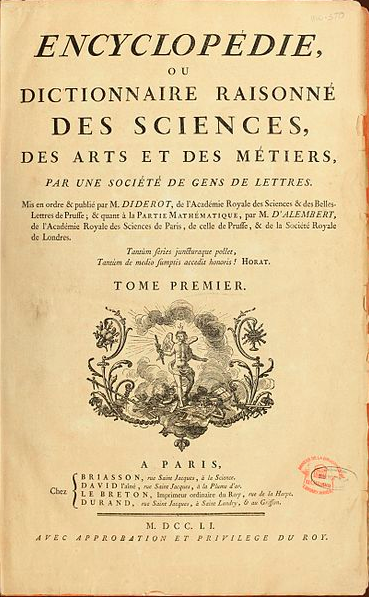
began to change in the mid-eighteenth century with the publication of Denis
Diderot and Jean Le Rond D’Alembert’s Encyclopédie
with its innovative and confronting exposition of the mechanical arts. But it
was only following the establishment of the Conservatoire des Arts et Métiers
(1794) in Paris during the French revolution that administrators and
politicians began to realise that design had a separate function to
traditional arts practice, one that abjured the idea of direct patronage in
favour of education and promotion. More important was the realisation that
design, or as it was more commonly understood, industrial art, could play a
significant part in the expansion of trade and industry.
By the early 1830s it was becoming evident in Britain that,
notwithstanding its position as the first country to embrace industrialisation,
its manufacturing was losing out to French, Prussian and Bavarian industry in
part due to the abysmal standards of the design in its manufactured
commodities. Between July 1835 and July 1836, a British House of Commons Select
Committee on Arts and Manufacture, chaired by a Liverpool MP William
Ewart, inquired into ‘the best means of extending a knowledge of the arts and the
principles of design among the people (especially the manufacturing population)
of the country’.

One outcome of the committee’s deliberations was the
establishment of twenty Schools of Design in manufacturing centres throughout
the country including schools, at Somerset House in London (1837), Birmingham
(1843) and Glasgow (1845). Another, more
visual, if transitory, legacy of the committee’s deliberations was the 1851
Great Exhibition of the Works of Industry of all Nations. Both moves impacted
the distant colony of New Zealand: tiny as it was, New Zealand was a captive
market for British manufactured commodities, many of which were designed by
students of the school; and, from 1851 New Zealand participated in a number of
international exhibitions, sometimes barely visibly, and held three, although
their international character was not particularly evident. Moreover, as Ann
Calhoun has noted, New Zealand art schools established in the 1870s and 80s
employed graduates of the National Art Teacher Training Scheme – the South
Kensington System – and, more often than not, adhered to its training syllabus
with a considerable degree of verisimilitude (A Calhoun, The arts and crafts movement in New Zealand 1879-1940 (Auckland:
Auckland University Press, 2000)).
By the end of the nineteenth century, the British state’s
interest in design and industry had waned, notwithstanding increasing evidence
that it was losing the manufacturing wars, not only against its old competitors
on mainland Europe but also to the rising industries of the United States. In a
belated response, British civil servants launched a series of design-focussed initiatives, including a dedicated exhibition design organisation, the
Exhibitions Branch, located within the British Board of Trade. Following the
First World War, the same department of state launched a semi-public design
promotion body, the British Institute of Industrial Arts, which sought to
interest both manufacturers and, to a lesser degree, the public in the idea of
design; it failed.

In July 1924, Ramsay MacDonald prime minister in the
short-lived first British Labour administration, acting on the advice of the
president of the Board of Trade, Sidney Webb, established a committee ‘to
inquire into the conditions and prospects of British industry and commerce,
with special reference to the export trade.’ (Great Britain. Committee on
Industry and Trade, Factors in industrial
and commercial efficiency (London: HMSO, 1927), ii). Industrial art was one
of the factors addressed by the committee but it was not until the return of a
Labour administration that any action was taken to address the committee’s
findings. In July 1931, William Graham, president of the Board of Trade in the
equally short-lived second Labour administration, appointed a committee under
the chairmanship of a Liberal peer, Lord Gorell, that was required to
investigate and advice on the formation of a ‘standing exhibition of articles
of everyday use and good design of current manufacture’. (Great Britain. Gorell
Committee, Art & industry
(London: HMSO, 1932), p. 5).

The Gorell report prompted the formation in 1934 of the
Council for Art and Industry, an advisory body located within the Board of
Trade, chaired by Frank Pick and charged with dealing ‘with questions affecting
the relations between Art and Industry’. (Great Britain. Council for Art and
Industry, Design and the designer in
industry (London: HMSO, 1937), p. 5). Success also eluded the Council: it
upset Conservative politicians, alienated civil servants at both the Boards of
Trade and Education and ended up as the whipping boy for British failure at the
Paris Exposition International held in 1937; finally, it was suspended at the
start of the Second World War by an unconvinced Conservative government.
It was the concept of planning that rescued
state-sponsored design promotion from administrative oblivion. The adoption of
a command economy during war suddenly made a whole range of hitherto concealed
data sets available to the civil servants – many of them recruited temporarily
from the private sector – who had been charged with maximising national
economic efficiencies. What they discovered about the way British industry had
operated in the recent past shocked them into recommending drastic measures,
particularly in respect of the role manufacturing industry would play in
post-war trade. In April 1942, an official committee, titled the Sub-Committee
on Industrial Design and Art in Industry, was formed at a meeting of the
Post-War Export Trade Committee of the Department of Overseas Trade. It would
go through various permutations, be transferred between a number of departments
and would require the endorsement of a not entirely convinced coalition war
cabinet.
The result was the formation in December 1944 of the
Council of Industrial Design (CoID), the template for all the design councils
that would later be set up throughout the Commonwealth. It was charged with promoting
‘by all practical means the improvement of design in the products of British
industry’. The council was comprised almost entirely of industrialists and its
work was undertaken by an administration separate but answerable to the Board
of Trade. For its first eight years of operation it attracted substantial
government funding.
≈
Design as a subject has rarely garnered the attention of New
Zealand legislators or its civil service. Aside from a couple of copyright acts
(1886 and 1953) which parroted clause for clause earlier British legislation, debate
about design occurred only once in the New Zealand parliament when in 1925
Gordon Coates sponsored Āpirana Ngata’s Māori Arts and Crafts Bill through the
House of Representatives. So, the appearance of an Industrial Design Bill on
the legislative calendar for 1966, sponsored by the farmer-friendly, conservative,
National party government must have come as a shock not only to MPs but also to
their constituents.
However, the bill wasn’t the result of a right wing administration,
no matter its centrist gloss, suddenly converting to the idea of big government
and a planned economy, but rather a muddled compromise measure resulting from
an initiative sponsored by the previous Labour government and the brainchild of
Dr William Ball Sutch, sometime permanent secretary of the Department of
Industries and Commerce, who had been recently sacked from that position by the
bill’s sponsor, John Marshall, the minister of Industries, Commerce and Overseas Trade.
 |
| John Marshall (right) speaking with an employee of the NZIDC at the New Zealand Industries Fair, Christchurch, in August 1970. Designscape 36 (1970). |
Sutch was highly-qualified: he had a PhD in economics and
political science from Columbia University in New York; he was sophisticated,
well-travelled, intellectual; pretty much of an anomaly in the New Zealand
civil service and a rarity in New Zealand society. He was a passionate
defender of the poor and oppressed, a feminist avant la lettre, a committed nationalist and an ardent controversialist.
Sutch was also a remarkable administrator and, under his watch, the Department
of Industries and Commerce became the most professional department of state in
the New Zealand public service. John Marshall was the antithesis of Sutch; a
lawyer by training with an interest in evangelical Presbyterianism, rugby and
the traditional arts. He had a reputation as a ‘skilled parliamentarian’ and later,
for some nine months, was prime minister. He is best remembered as heading the
New Zealand team attempting to negotiate favourable terms of trade following
Britain’s entry into the European Economic Community.
It’s difficult to know when Sutch became aware of the CoID
or what prompted his thinking that forming a design council in New Zealand was
a good idea although we have some inkling when, in a 1960 letter to the British trade commissioner in Wellington, he recalled that he
was already:
familiar with the work of the
[CoID] and when I was in London during the trade discussions [in April 1958] I
saw something of their work and had discussions with the man who has now been
appointed in charge [Paul Reilly]. I brought back with me a fair body of
material and in addition the Department [of Industries and Commerce] has been
subscribing for some time to their journal ‘Design’. My thought is that it is
about time New Zealand had a similar organisation, but of course it cannot hope
to be as powerful or achieve the results of the UK one (Archives New Zealand, IC W1926 57/1/6 vol 1 box
1797).
What we do know is that Sutch’s interest in design formed part of a
wider approach to reinventing the New Zealand industrial landscape that he
began to develop shortly after returning to the country in 1951 after six years
in Sydney, New York and London. Sutch’s vision was for a country that was
economically as well as politically independent; one that produced more than
just the by-products of grass; and one that ensured that all its people were
able to live well and without want.
Sutch’s thinking on the industrial policy had been galvanised by
a realisation that the country could no longer depend on the export of unprocessed
agricultural commodities to Britain for the maintenance of its prosperity. These
aims were clearly articulated in a speech ‘The next two decades of
manufacturing in New Zealand’ he delivered to the 1957 conference of the
Australasian Association for the Advancement of Science.
As the country grows,
New Zealand’s main assets can only be the skill, experience and intelligence of
her people. Small countries like Finland, Denmark or Switzerland have even
fewer natural resources than we have. Yet because of the skill of their people
they are important manufacturing countries. Highly-paid labour should connote
highly-skilled labour. New Zealand’s present pre-occupation with the tariff may
be too negative approach. Should we not be more concerned with producing goods
which have as their main ingredient not raw materials but brains and skills?’ (W
B Sutch, The next two decades of
manufacturing in New Zealand (Wellington: [New Zealand] Department of
Industries and Commerce, 1957), p. 21).
His contention, his dream you might say, was that a local
design promotion body would be a critical element in this intellectually-driven
industrial renaissance. In Sutch's view New Zealand's future lay with its people and not on the production of grass. It was a stance that went against pretty much everything the still rural-dominated National party stood for.
Sutch wasn’t the first New Zealander to respond to
the British design initiative; far from it. The Wellington-based Architectural Centre
Inc, established in 1946 and with which he was involved, actively promoted
design matters. In Auckland, architects and those connected however remotely
with the practice of design had formed the short-lived Auckland Design Guild in
1949. And in Christchurch, a well-connected indent agent, Roger Lascelles,
sought to establish a modern design retail outlet, ostensibly inspired by the CoID’s
Design Centre in Haymarket, which had opened in 1956. Lascelles’ was no slouch when it came to pushing his barrow and his agitation resulted in
the formation in December 1959 of the relatively well-funded Design Institute
of New Zealand, a body that initially seems to have been entirely devoid of designers. However, looking at the surviving documentation, it seems clear
that Lascelles failed to comprehend either the purpose and nature of the CoID
or its governance. Later Lascelles claimed that he had been appointed ‘a
representative’ of the CoID; indeed, by 1963, he was listed as an 'overseas correspondent' of the CoID's Design periodical. However, correspondence from 1960 between the CoID
and the New Zealand Department of Industries and Commerce indicates that far
from entering into a formal relationship either with him or the Design
Association, the CoID had doubts as to their status. Lascelles later attributed the failure of his connection with the CoID to Sutch’s
‘interference’ but neither he nor the Design Association had the resources, let
alone an understanding of what comprised a design promotion body, to run such
an organisation.
From an indent agent’s perspective, Sutch was the
devil incarnate in the sense that the Department of Industries and Commerce played a
significant role in determining not only the country’s tariff regime but also
its import licensing system. Importers had been demonising the latter control procedure
since its introduction in 1938 and they found considerable support for their
actions amongst National party politicians. Notwithstanding all evidence to the
contrary, a significant tranche of New Zealand’s more affluent classes firmly
adhered to the belief that New Zealand consumers were being denied access to
the good design commodities that were widely available in the United States and
Europe. So, in a somewhat bizarre combination of political opportunism and
provincial ignorance, modernism, conventionally regarded by the country's dominant media as a tool of the socialist
state, became a rallying call for the traditional right.
There weren’t all that many designers working in New Zealand
in the late 1950s, rough estimates from the Department of Industries and
Commerce suggested there were about twenty, including tertiary level teachers of design. Most
of those few that had been trained through the art schools survived by school
teaching; others migrated; and a select few were employed in support roles by companies such as the white goods manufacturer Fisher & Paykel Ltd and the ceramic manufacturer Crown Lynn Potteries Ltd. The country’s small manufacturing sector was largely
ignorant of design issues, preferring to copy, usually badly, popular overseas
models. But if the importers envisaged Sutch as the devil, the designers
weren’t far behind, identifying the department as having ambitions to prescribe
how design was practised, making it subject to ‘the dos and don'ts’ of
government regulation. But design councils weren’t about organising designers,
let alone subjecting their work to the rigours of regulation. In their initial
form, the design councils were about improving trading prospects; about
educating manufacturers and consumers to the efficiencies of ‘well-designed’
commodities; it was only later, when the wanting status of design education
became apparent, that Sutch sought to recruit education to his vision of a
modern, industrial economy and to provide designers with the institutional support necessary for the development of the practice in New Zealand.
Unlike the various voluntary design appreciation societies
that emerged in New Zealand following the Second World War, Sutch was in the
unique position of being able to do something about turning his dream into
reality. This came about with the election of a Labour administration in
November 1957 and his subsequent appointment as permanent secretary. Throughout
1958 Sutch seems to have reconfigured the department, transmogrifying what was
essentially a loose assemblage of time-serving administrators into a modern
administrative department of state, focussed on providing politicians and the
public with informed, impartial advice based on properly undertaken empirical
research. And in early 1959 Sutch established a design study team within the
ministry, which comprised not only economists and (eventually) a designer, but
also investigators and researchers who, through the trade commissioner
service, had access to information, both local and international, hitherto
unavailable to New Zealand. The outcome of the study team’s work not only laid
the foundation of the NZIDC but prompted a wider debate about the role and
function of design in a modern economy.
More information on the formation of the New Zealand Industrial Design Council can be found in my paper ‘Modernizing for trade: institutionalizing design promotion in New Zealand 1958-1967’, Journal of Design History, 24:3 (2011), pp. 223-239. <https://doi.org/10.1093/jdh/epr021>.
More information on the formation of the New Zealand Industrial Design Council can be found in my paper ‘Modernizing for trade: institutionalizing design promotion in New Zealand 1958-1967’, Journal of Design History, 24:3 (2011), pp. 223-239. <https://doi.org/10.1093/jdh/epr021>.


